- Home
- Blog Details
Depression, a prevalent mood disorder, is being studied by researchers who seek to understand alternative treatments and their underlying mechanisms. One area of interest is the role of dopamine levels in the development of depression. A recent study found that matcha tea may have antidepressant-like effects in mice by influencing the dopaminergic systems in the brain.
Depression affects 5% of adults worldwide, and while effective treatments are available, some patients experience unpleasant side effects, and almost one-third of patients either have no or a poor response to medication. Researchers are studying complementary and alternative therapies that may help treat depression.
A study published in the journal Nutrients investigated the potential antidepressant effects of matcha tea powder and the underlying mechanisms involved. The study found that matcha tea had antidepressant-like effects in a mouse model of depression.
Depression is a mood disorder that can affect a person's ability to function in everyday life and can cause a persistent feeling of emptiness. The exact cause of depression remains unknown, but certain risk factors increase the likelihood of developing it, such as experiencing traumatic events or having a family history of depression. Researchers are working to understand the underlying components of depression, including the impact of neurotransmitters like serotonin and dopamine on the condition.
Dopamine, a chemical messenger that affects mood and motivation, is believed to be a contributing factor to depression.
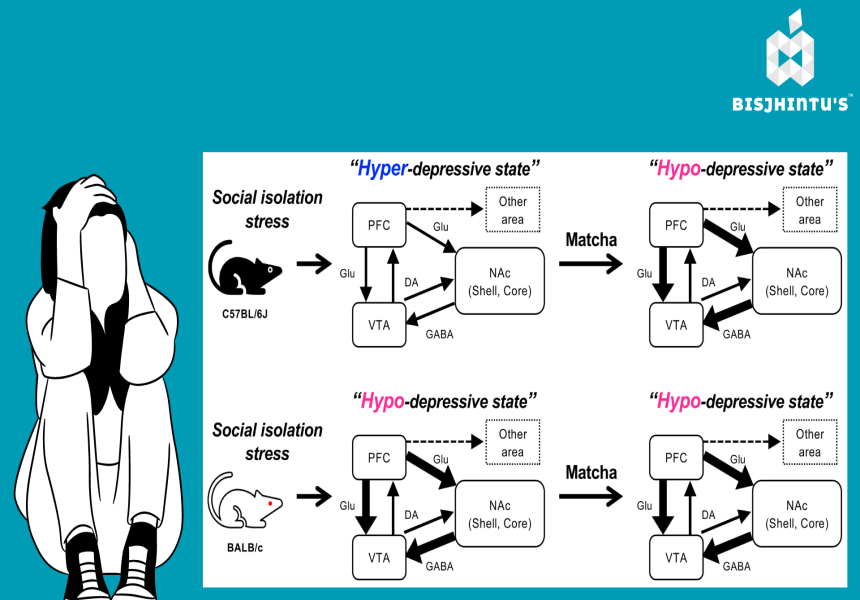
The study examined the potential of matcha tea as a depression treatment in mouse models. The researchers conducted the experiment on socially isolated mice to determine the treatment's effectiveness. Additionally, the researchers compared the effects in two different genetic groups of rodents: C57BL/6J strain mice, known for their susceptibility to stress in animal studies, and BALB/c strain mice, which are more stress tolerant.
After a week of social isolation, mice from each group were given matcha tea powder. While it is impossible to replicate the complexity of depression in a mouse model, the researchers used the tail suspension test to measure depression-like behavior in mice.
The tail suspension test indicated that matcha tea helped to alleviate depression-like symptoms in the stress-susceptible C57BL/6J mice, while there was no effect observed in the stress-resistant BALB/c mice.
Furthermore, the researchers investigated the neural mechanisms behind the effects of matcha tea and found that it appeared to modulate dopamine systems in the brains of the C57BL/6J mice. The study suggests that matcha tea's effects on certain areas of the brain contribute to its impact. However, its effectiveness seems to be contingent on the mental state, as the C57BL/6J mice under high mental stress from social isolation were the only ones who benefitted from the matcha tea powder. This experiment had its own set of ‘ifs’ and ‘buts’ and some limitations too. The experiment was done on mice, it has a lot to dig into because it will take a lot of data collection to check whether it is equally effective on humans too.
Given these findings, it is crucial to explore the potential of matcha extract and other substances that could modulate the dopamine system. This research could be beneficial in promoting overall health and wellness, as well as addressing specific neurological and psychiatric disorders.
Hence, matcha which has already been associated with goodness and richness has bagged another achievement of being an antidepressant too. This quality of matcha will be extremely beneficial for us as it is not expensive like other antidepressants. It will be resourceful for people combating depression and are not financially stable. Also, the fact that it does not have any significant side-effects. Many antidepressants have a lot of side effects but matcha, green tea leaves’ powder, does not possess any side-effects.